- ProductsSearch and BrowseRecommendationsCustomer Engagement
Visual Search converts inspiration into sales


Key Highlights
- Visual search allows shoppers to upload an image, screenshot, photo, or URL and find visually similar products instantly, eliminating the need for keyword-based queries.
- Netcore Unbxd Visual Search delivers 4–5x higher conversion rates compared to traditional search, 71.6% shopper engagement vs. 64.7% for keyword-based search, and adoption in ~18% of search sessions (Netcore Unbxd platform data).
- In fashion, visual search captures pre-verbal intent, when shoppers know what they want visually but cannot describe it in words.
- In health and beauty, visual search enables shade matching and product duplication, solving discovery gaps where text fails.
A shopper saves a screenshot of a dress from a social media platform. Another takes a photo of a lipstick shade they want to match. Both arrive at your site ready to buy, and neither has a keyword to search.
This is the gap visual search solves.
Instead of forcing shoppers to translate what they see into text, platforms like Netcore Unbxd Visual Search enable them to search directly using images.
In this blog, we’ll break down how visual search works, why it performs differently from text search, what are visual search benefits, and how a style inspiration discovery can drive conversions across fashion and health & beauty ecommerce, two of the most visually driven categories.
| Scenario | What shopper has | Keyword matching search result | Visual search result |
|---|---|---|---|
| Screenshot (fashion) | Image of a dress | Generic results | Style + colour match |
| Outfit photo | Multi-item look | Multiple searches needed | Multi-item detection |
| Lipstick shade | Photo on skin | Broad results | Shade-matched results |
| Skincare product | Packaging image | Requires name | Image-based match |
Table A: Highlighting where keyword-matching search falls short for fashion and beauty shoppers
The pre-verbal intent problem for retailers without visual search
Pre-verbal intent is when a shopper knows exactly what they want visually but cannot describe it in a query. This is common in:
- Fashion (style, silhouette, texture)
- Beauty (shade, finish, tone)
Keyword-based search struggles because these are visual attributes, not linguistic ones.
Screenshot shopping: how Gen Z discovers and buys using visual search
Shoppers increasingly:
- Save screenshots from social media platforms
- Return later to find the product
Without visual search:
- They leave your site
- Use Google Lens or another platform
Visual Search: How it works
Simply put, AI visual search analyzes every aspect of the image, identifies product attributes, categorizes them, and then looks for similar products with as many identified attributes as possible. The more common attributes are found, the more exact it is to the image it is comparing it to.
As we know, any image represents pixels; all images fed into the database get broken down into numbers called vectors. These vectors get passed through a neural network called CNN (Convolutional Neural Networks). A Convolutional Neural Networks (CNN) employs a model consisting of a statistical function sequence that continuously analyzes and updates the pixelated numerical vector until the machine can accurately recognize and classify the image.
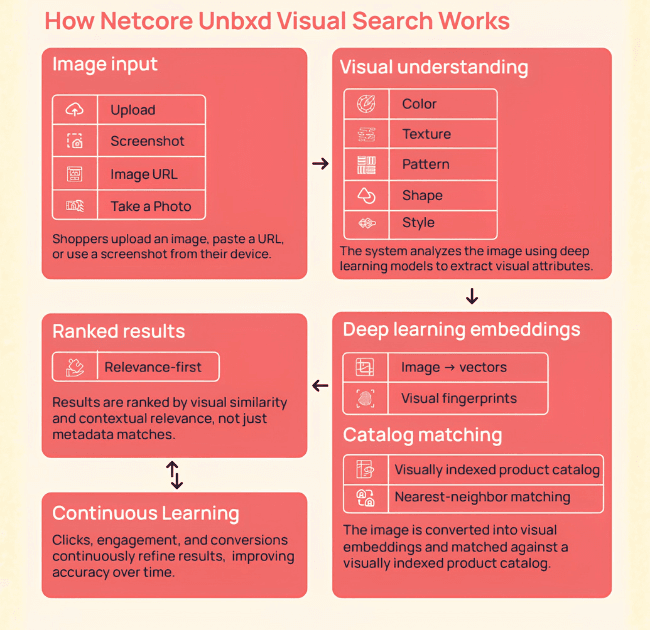 Fig 1: Image showing how Netcore Unbxd Visual Search works
Fashion case evidence: Search and personalization impact
Netcore Unbxd customers using AI-powered discovery have reported:
House of Indya → ~30% conversion rate increase Deborah Lippmann → ~40% conversion increase and 45% more orders from search
These outcomes are driven by AI-powered search and personalization, reinforcing how better discovery systems impact revenue.
Visual search engine for Health & Beauty ecommerce
What is visual search for health and beauty ecommerce? Visual search platforms in health and beauty ecommerce allows shoppers to upload an image, such as a lipstick shade, skincare product, or packaging, and find exact or similar products based on visual attributes like colour, texture, and form.
The shade-matching use case
One of the most established use cases:
- Upload lipstick image
- Match closest shade
This is widely seen in industry examples like Sephora’s shade-matching tools (industry reference). Mechanism:
- Extract colour signature
- Match against catalog
Product duplication: Search by packaging or texture
Shoppers often:
- Photograph a product
- Screenshot from reviews or social media
Visual search in ecommerce allows:
- Exact product match
- Or closest alternative
Four criteria for evaluating a visual search platform
- Vertical-specific model training
- Multi-item detection capability
- Hybrid search support
- Published performance benchmarks
Visual search engine solves a problem ecommerce has struggled with for years: Shoppers often know what they want, but can’t describe it.
By allowing users to search with images instead of words, it bridges the gap between inspiration and purchase. In fashion, it captures style intent. In beauty, it enables precise matching.
And in both, AI image search turns high-intent sessions into conversions.
Frequently Asked Questions
No. Visual search performance depends heavily on image quality and consistency. Poor images reduce matching accuracy and limit discovery effectiveness.
No. It complements them. Visual search handles discovery, while filters refine results.
Yes, if the catalog is indexed correctly. It matches based on visual similarity, not prior search history.
Modern platforms reduce complexity significantly, making visual search more accessible than earlier implementations.


